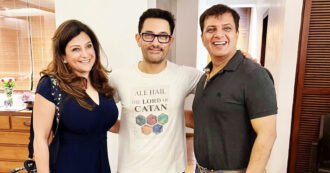
Crossroads: Part 2
by Arun Nathani on May 2, 2012
The road less travelled
I finally spoke, “So tell me, what is it going to be… which path do you want to pursue—management, technology, or sales?” Rajesh Moorjani smiled. “None of the above. I have my own calling.” And sorry folks, but everyone who commented on my previous blog was wide off the mark… for Rajesh’s chosen path had nothing to do with worldly options. Rather, his calling was of a much higher grade, almost ‘divine’…
Here is the secret I held back from all of you. When Rajesh had fallen ill, his sickness was more terrible than mere terrible. It was an acute attack of xxx (a severe life-threatening disease, one which Rajesh doesn’t wish to tom-tom to the world), one from which he had to snatch his life back from the jaws of death. And that journey was a life-changer that most of us can relate to only ‘theoretically’. His physical frame became half as lean as it used to be. Rajesh’s medications and sabbaticals continued for close to a year while his health slowly returned to normal. The illness experience changed Rajesh in a big way. He understood the transient nature of existence and became more contemplative, philosophical, and “spiritual”. Spirituality, it seems, was providing him the much-needed solace as he recuperated. On the basis of my subsequent interactions, here is Rajesh’s ‘gyan’ rephrased in my words, “Human life, in the cosmic scheme of things, seems very insignificant and feeble. One may dream of conquering the universe, but for the powers above, one’s very existence is of inconsequential significance. And if such is the backdrop, why stress ourselves in meaningless pursuits just for the sake of making society happy? Why not re-channel those energies towards more meaningful goals that really make a difference to one’s life?”
Rajesh’s semi-decision was made—quitting Cybage was the decisive part, what he wanted to do for a living was the indecisive part. He had a few software product ideas he wanted to try out but nothing concrete. All he knew was that he needed some time to rediscover himself and focus more on his spiritual pursuits too. And for a good reason, I could completely relate to Rajesh’s mindset. After all, a long time ago, I had been there myself (a story I shall save to tell another day). I invoked all my ‘close encounters of spiritual kind’ to deter him from going deeper into his spiritual quest at such an early age in life, but my marketing skills to hold him were put to failing test. Rajesh heartily acknowledged the risk of being reprimanded “I told you so” someday, and then ceased to be a Cybagian.
Over the next few months, Rajesh buckled down and began to try a few product ideas of his own. In the day, he worked by himself and began coding his product prototypes single-handedly. Parallely, he became a regular at a few select spiritual centres in Pune. Non-vegetarian food and social drinks were passé; meditation was in vogue. The spiritual awakening voyage and “the good life” were on the right track. Until after a few months, of course, Rajesh began to find it pretty hard to sustain on his own. Neither product prototypes nor spirituality pay the bills! As time passed by and the product dreams did not bring in the money, his thoughts started clearing—even spiritual pursuits require financial comfort zones which he couldn’t sustain! Ultimately, he gathered the courage to face my “I told you so” dressing down, and thus began his second innings with Cybage, this time as a consultant!
Rajesh got back into his old mold, and for a while good old days seem to have returned. He managed some real big projects for Cybage during this period and made several trips to the US to handle critical projects of some our most prestigious clients. But it was not to last; somehow things had changed. He worked hard, but the spark seemed to have lost some of its illumination. Plain indiscriminately restless in all roles—technical, managerial, or business aligned. He felt that there was something missing. He wasn’t being able to strike a balance between his professional and personal life at all, and his other holistic pursuits were not helping much either. Also, the routine of corporate life, even with all its self-glorifying perks, just wasn’t satisfying him much anymore.

File photo from one of the US trips with Rajesh
As Rajesh’s restlessness multiplied, I concluded that perhaps what he really needed was a change of environment. There was one smart option to spin him out. Cybage, at that time, was in the process of setting up a near-shore development facility in Redmond US, and needed a trusted professional to head the operations. I proposed the option to Rajesh, but he did not buy in. He mentioned that because his heart was not in it 100%, he preferred not to take it up at all. The efforts once again hit a dead wall. The unexcited Rajesh decided to hang up his boots again once and for all. However, this time around, I managed to convince him to go on a sabbatical instead of resigning.
Over the next few months, Rajesh’s search took him away from Pune to a few places all over India. He adopted a ‘satvik’ life dedicated to helping the ashram communities at a few places with their IT needs. He did that for a few months and then came back to Pune for a while. A subsequent relentless pressure from me and his dad landed him back at Cybage for a discussion. I offered to keep him close to executive management, involving him in our internal strategic IT initiatives. However, this time around Rajesh seemed to have made up his mind: Cybage was no longer a “startup” and had grown into a big company. And the big-company corporate life was really not going to light his fire anymore. His innings at Cybage were over!
The only difference was that this time around his plan was more definitive. Somewhere, the realization had sunk into him. Thanks to his diversions, he had ended up missing the bus at Cybage. He could have been the CTO or the Head of our US office if he wanted, but had willfully decided to turn down those opportunities. Now he needed a comeback to catch up on lost avenues. His entrepreneurial instincts took over and he went back with double commitment and total focus to brainstorming about building a global world-class product right from India. It was time for his head to create some wealth for his flesh & blood, before the heart could reinstate its focus back on the soul. Rajesh finally decided to pursue his product dreams, this time devoid of any distractions.
Over the past few years since Rajesh finally quit Cybage, he has tried his hand on building at least three innovative startups. After some hits and misses, he has finally found significant success in a startup venture named Programr . Programr is an impressive startup that provides aspiring IT students access to a 24×7-anywhere IT Lab right in the browser, thereby helping these students worldwide become programming gurus wherever they are. Recently, Programr was featured on TechCrunch , Silicon Valley’s #1 startup portal, a significant milestone. Hopefully, this is the beginning of much deserved success for Rajesh!
About six months ago, I ran into Rajesh in a standup comedy show at a local pub. We caught up on our good old days, chatted and laughed together. He is a regular mainstream guy now. The spiritual getaways are much more toned down and replaced by the original focused professional who loves to have a good time out with his friends once in a while—one who aspires to excel professionally, have a good family life, and then wait for a logical time for his cosmic pursuits. A knowing smile twinkled in his eyes as we ’cheered’ over two bottles of beer. Behind the twinkle was the warning not to broach the “I told you so” sermon.
Rajesh remains a close friend to this day, and he has my best wishes for all his current and future endeavors. Both Rajesh and I have realized from our experiences the importance of ‘sequential’ time for everything in life. Of course, it would be interesting to observe whether the thoughts by the followers of this blog are aligned with the above narration. The new generation is not apprehensive of trying out radical options and would rather learn from its own mistakes. The oldies like me are less experimental and more stereotype in our thought process. I wonder whether the followers of my blog are more the new-generation radical type or the old-generation stereotype?
Crossroads: Part 1
by Arun Nathani on April 3, 2012
The Predicament of Choices
I intently watched the lean figure standing in front of me. I had known him for a long time now; this was his thinnest version. He had always been a self-assured good-looking chap from the day of his induction through his subsequent journey of evolvement into one of the finest professionals at Cybage. But not today. Today, he looked pale and fragile. Unless, of course, you peeped closer into his eyes… for they exhibited the same assertive illumination that I had gotten accustomed to over the years. I finally spoke, “So tell me, what is it gonna be…”
Mr. X was one of the first friends I made in my brief professional stint at Ruksun. I was his manager. Then, when Cybage started, X referred his younger brother Y to me for employment. Y was a fresh graduate from Pune Institute of Computer Technology, and clearly the brighter of the two siblings. A complete package deal—very quickly, he spread the tremors of his arrival to all@cybage! In those days, we used to measure technology professionals on six parameters (The basics have stayed the same
)—Technical skills, IQ, Process, Sincerity, Communication and Attitude. Y exhibited equal radiance in all of the above. And since the company was small, his multi-traits didn’t go unnoticed and were leveraged to their full potential.
Y, the Engineer: Those were the nascent days of Java. The world was trying to figure out its choice between Microsoft, Java, and LAMP platforms (it still is)! Y had language agnostic talent, and thus became a defacto choice for all multi-technology-flavored projects that were abundantly making rounds in the offshore industry. Clearly, he was a first-rate technologist who exhibited the CTO traits for ‘Cybage of the future’.
Y, the Manager: As expected, for every project that Y would get assigned to as a Project Leader, the role of Project Manager would become a mere formality. You see, his crisp, clear communication and level-headed thought process, along with great interpersonal and process skills, did not leave too much scope for an official PM to provide any significant value-add. Little wonder then that the idea of grooming him towards delivery management roles started gathering momentum.
Y, the Salesman: In late 90’s, Cybage was not big enough to afford seasoned sales professionals. Yet, the organization was not that small either where it made sense for the CEO to make solo new prospect calls. So, this called for a “shared” senior resource to step into the business development role. Mr. Y fitted the bill perfectly, and started tagging along in my overseas business trips. Soon, his contribution became so invaluable that I started wondering whether his real calling was the Head of Business Development at Cybage.
The years flew by, and the 3-way bond between Y, Cybage, and me grew stronger. While I met him almost daily in Pune, the US trips presented great cementing opportunities. One of the early believers in Cybage, Y insisted that we should shy away from low-hanging fruits (small projects) and redirect our growth focus towards capturing larger, complex accounts. Around this time, we got our first major breakthrough appointment with a business group within Microsoft. But, unfortunately, after a series of presentations and lengthy due-diligence, Cybage returned empty-handed from the opportunity. I was naturally crestfallen. But it was Y who encouragingly reminded me, “Just give this a thought—the world’s largest software company found Cybage worthy enough to consider for partnership. Isn’t that by itself an incredible achievement?!!!”
Of course, it was not “all work, no play” times that we shared together. We had our moments of roaring laughter. Once even in the presence of a business prospect!! You see, in those shaping years, Cybage marketing presentations didn’t have much juice. So they needed to be spruced up with witty one-liners. One of my favorite ice-breakers was about the pre-inception days of Cybage: “I lived in Chicago for many years, and one day I decided that it was too cold for me and moved back to India.” The one-liner always managed to solicit a knowing smile from the prospect
. Y, of course, had heard it a zillion times, and was more amused each passing time. And in one of those new prospect meetings, he couldn’t control himself anymore and just let go… he burst out laughing, and I joined him… and we both laughed until tears threatened to roll down… the prospect just stared at us perplexed!
No doubt, Mr. Y wore multiple hats at Cybage—from corporate strategist to granular level executor to a well-wisher and a personal friend! And as he started getting further closer, a worrying realization began to dawn on me. You see, his dependency on so many different roles had gotten so interwoven that he was slowly but surely drifting in the direction of “jack of all”! I understood that the time had come to give him clear career direction lest he ends up getting lost in the blur completely. But unfortunately, his intricate technology, management, and sales dependency made it almost impossible to weave him out of the web! Then it happened—a life defining moment in Y’s life that made the ‘weaving-out’ easier. You see, Y fell sick—terribly sick—and was forced to go on a sabbatical for three months. Cybage had no choice but to eliminate his dependencies in all realms of his contribution. And eventually when he returned from his illness, I had the golden opportunity to push him afresh in one of the three directions.
I finally spoke, “So tell me, what is it gonna be… which path do you want to pursue—management, technology, or sales?” No sooner had the words escaped my lips, I realized that this was an inconsequential exercise. I already knew his answer. So will you all shortly— his answer, his subsequent story, and of course his true identity—but after a short bloggercial break.
In the meantime, I am very curious to know which field would today’s mainstream professional choose if the professional shared Y’s talent and were to be placed in the same predicament. If you have it all, where is the future perceived brightest in the Indian IT service industry a) technical field; b) managerial field; or c) sales field?
Ascending a Pyramid
by Arun Nathani on February 29, 2012
A leadership tip by a follower
Who would imagine that an article with rock-climbing references can have the ingredients to trigger a corporate debate?! It was interesting to note the emergence of many fresh perspectives on the intriguing art of toggling between the work field and the play field. But, of course, the real-world rock climbing carries a lot higher stakes. Any tripping in the balancing act can spell doom for the player. While work and play require ‘horizontal’ balancing; the intense sport of rock climbing is all about maneuvering ‘vertical’ heights. One would suspect, therefore, that the ensuing corporate lessons from this sport must also be no child’s play!
Just like a climber, today’s professionals find themselves lurching in the middle of two worlds: one above, the other below. You see, as we all ascend the professional pyramid shaped rock, the relationships that we build with the stepping stones—the senior stones above and junior pebbles below—have a strong influence on how high our career will scale.
The Paradoxical Setting…
Our (Deepak and mine) father was a no yes-man when it came to work place. He was a very principled professional who could not relate to the concept of “buttering” up his bosses. Thus, while his colleagues would go making courtesy visits during festivals or inviting over their superiors for wining & dining, my dad refrained from such activities. Obviously, he paid a heavy professional price for his ideologies. You see, he was a little ahead of his times.
Today, our planet has evolved. The new generation bosses do not care for outdated “yes-man” functional styles of their subordinates. The combination of Dad’s and new generation’s influence has ensured that I (and Deepak) have adapted well with new ideologies; somehow we have never expected special hospitality gestures from Cybagians on any occasion.
But here is the trick. Even the CEO is not an absolute boss; for he needs to be the organization’s ambassador to customers at large. When my eyes roll up, I see a client; when they hover down, there are employees all around. So while not expecting any unusual warm gestures from subordinates has been my personal discretion, there was a time when this thought process had gotten so institutionalized in my DNA that I adopted the same equality (albeit impractical) while treating Cybage customers.
The identical dilemma is faced by many professionals today. Many of us treat our subordinates so much at par that the reverse extension of this philosophy has led to dilution of our respect towards seniors. Result, come appraisal time, somewhere our appraisers—be it the customer or our bosses—subconsciously shortchange us for our callous attitude.
So, an interesting paradoxical situation has emerged here… the people below us are supposed to be ‘equal’; however, the people above are to be treated at a ‘pedestal’ level! But the indiscriminating laws of nature render this frequent mind-switching very difficult—either everyone is equal, or no one is equal! Unless, of course, you get incredibly lucky and end up running into someone who shows you alternate options…
The Unorthodox Balancer…
Several years back, when Cybage operated out of residential bungalows, a tall, skinny guy walked in for an interview one day—an erect posture, authoritative talk, and a firm handshake. He would use “Sir” title to address, and did everything like an army man, just stopped short of rendering a salute! It was one of those adorations at first sight—five minutes with him, and we knew we had the right person. Later, we discovered that he indeed came from a family of distinguished army officers; his father was Major General and one of his triplet siblings was a Major in the Indian Army.
Once he was on board, he treated his team mates fair and square, and his quick rising popularity amongst his subordinates resulted in his flash elevation to department head, and eventually as one of the big success stories at Cybage. But the objective of this “Shaping Years” blog series is not to glorify anyone, for heroes have their abundant share of fallacies too. Rather, I want to share an interesting tip that I captured from a peculiar characteristic of this individual.
It is meaningful to note here that the relationship of this Cybagian with me has never been based on “flattering” tactics. In fact, he has always been voraciously opinionated. But he does one thing very different, ever since he became a Cybagian—he has made it a point to personally call me on every important occasion, be it birthdays or anniversaries, Diwali or New Year! And the vocals behind each call imbibe the same genuine sincerity as of the day he first strode in for his job interview!
Today, I have gotten so used to having him wish me on every occasion that I actually await his call. There is some kind of warm connection he has managed to establish with me. While this hotline doesn’t give him any benefit of not being pulled up like everybody else, the relaxed personal bond makes it easier for him to clear up the air and reconnect. Now, isn’t that a wonderful privilege to have for every professional while dealing with his customers or superiors? Gurvinder must be feeling so cool to have a boss who remembers HIM on his personal occasions, and occasionally on blogging sessions!!!
PS: Please be advised that the above story is only an illustration of a different relationship dimension between seniors and juniors; by no means am I implying that Cybagians need to start calling me up frequently (one nagging sardar is more than what I can handle
).
There are two basic rules that assist you in becoming an ace mountain climber…
One, don’t look down! For if you do, you will get disoriented and may fall down. And if you don’t, what is beneath you ceases to exist; it’s like you are standing on a flat ground! Result, everything below you is automatically bestowed the status of being “equal”! It is said, equality is never achieved by being extra sensitive to people below you. Rather, equality is achieved by NOT making any special efforts that may make your subordinates conscious of their lower position.
Two, look at the rocks above you with respect! For these are the rocks that will give you the footholds to help you ascend. True, there will be some loose rocks that you may not be able to trust. But the only way to figure out whether the rock is firm or loose is by tapping it, by closely feeling it to see whether it can be trusted. Smart professionals always “respect” their seniors for they know that the right ones will provide them the footholds to climb faster towards their objectives.
There must be, I am sure, other innovative perspectives of balancing hierarchical relationships. Rock-climbing itself may be holding other corporate lessons as well. So, once again, it’s the turn of the ‘climbers’ in the blogging audience to make their valuable contributions…
Swinging the Pendulum
by Arun Nathani on February 6, 2012
Work and Play
Mike Cartwright was a little different than most of us. I don’t recall when and where I first met him. But I distinctly remember he stood out in the crowd. Tall, athletic, lanky, shoulder-length blond hair, and a heavy accent. He also happened to be the Vice President of IMSI, one of baby Cybage’s early customers.
Around ’98, Mike made his first trip to India to visit Cybage. I drove down from Pune to Mumbai Airport to pick him up from his late night flight arrival. In those days, there was no expressway connecting Bombay and Pune. We traversed through the old beat-up highway, and got stranded in a massive traffic jam in the middle of countryside. Mike’s jet lag ensured that he stayed wide awake, and my vendor status ensured that I matched his alertness. Today, when I look back, I am thankful for that never ending night in wilderness. After all, I got to learn a lot about the real Mike behind the technology genius I was familiar with. Brilliant words were spoken that night. The new virtual world of dotcom. The real world outside the virtual world. The cosmic world outside the real world. He seemed to know most of the constellations in the night sky. And the politics of the turning earth. And the roadside fauna and flora of rural India’s early morning.
Prior to that night, I always rated Mike as one of the brightest digital minds on the planet. But that night I discovered that ‘profession’ to Mike was just a question of making a living—his being an IT geek was merely a ‘chance by compulsion’. He was a gypsy at heart—rock climbing was his only true love! Mike was raised in South Africa, trekking the African landscape of late 80s. Then in early 90s he set up a rock-climbing adventure magazine and equipment company to see whether he can make a living out of his passion. The unusual business idea laden with debt prompted him to take a break from climbing and relocate to bay area for work.
Then as VP of IMSI, he chanced upon a solicitation mail from Cybage and ended up initiating offshore partnership with us. I suspect that beyond offshore arbitrage, his real driving decision was the fascination of traveling to exotic places. His career strategy had no ambiguity—make just enough $$$ to pay off debt, and then set off on a rock climbing pilgrimage across continents! I still remember his target; as per his calculations all he needed was $20 per day to take care of his basic needs while going global trekking.
As IMSI started going down, Mike made his anticipated move along with his new wife Tamara who co-shared his passion. I lost touch with him over the next couple of years as he went dabbling on large hills of Peru and extended climbing trips in the southwest US and in South Africa. As the savings started dwindling, it was time to get back to civilization. This time around, the destination was Seattle based startup—Odyssey Technologies. We reconnected at personal level when Odyssey tied up with Cybage as its offshore partner.

Mike Cartwright
As luck would have it, Odyssey too went down, and Mike zipped off again—traversing the Berg tagging Cathedral Peak, Mponjewane, and Sentinel; then the frequent mountain and trail running in Seattle cascades, usually as an excuse to visit sunnier places in the middle of winter. Money started evaporating again; thus followed a short stint with Microsoft, and finally the incubation of his own startup Solid Documents . Once more, he started working with Cybage, but the startup nature of his needs did not make it conducive for a formal partnership to sustain.
Over the last few years, I have lost touch with him (for the third time)! It was only recently that I got the urge to reconnect with him, specifically for any interesting inputs to be touched upon in this blog. I wrote him an email a few weeks back, but he doesn’t seem to be accessing his emails. But thanks to Google, I have managed to locate his whereabouts from a magazine interview he appeared in about a year back (http://www.climb.co.za/2011/03/southern-rock-magazine/). And it comes as no surprise that he has now relocated to south island of New Zealand to re-pursue his rock climbing passion on a full-time basis!
Today, “work hard, play hard” is a motto practiced by many organizations. But Mike has taken this motto to a new level. As one of Mike’s close friends aptly puts it—Mike likes to “swing the pendulum”. Work 100%. Play 100%. Sequentially! The regular corporate world doesn’t understand this. Most of the successful people seldom switch off completely… the mainstream believes in striking a healthy balance—don’t forget work while playing, and don’t forget play while working.
I too belong to the mainstream. In fact, I extend this approach to almost everything I do. For example I enjoy binging, but I watch what I eat. I enjoy working out, but I need the TV on. I enjoy my vacation, but I can’t have my Blackberry ever switched off! I seem to be forever trying to balance everything I do—‘simultaneously’—it gives me a nice feeling of control. But then, I haven’t seen the other side, have I? Sometimes I wonder—who has got it “more” right: a) one who balances work and play ‘simultaneously’?; or b) one who balances work and play ‘sequentially’? Perhaps, it is time for yet another opinion poll 
“Loyalty needs no favors?”
by Arun Nathani on January 30, 2012
Thanks to all of you who took time to comment on my “how to reward loyalty” blog. All the observations were well thought-out, and many of them had interesting takeaways. Rather than imposing my own views, I would like to leave you all with yet another dimension of approaching debate topics…
Sometimes, it is not necessary that pros and cons of a debate topic have to be at loggerheads. Such as, in this case, perhaps the best way to reward loyalty is NOT to reward loyalty?! To appreciate this contradictory statement, one needs to get down to the basics and do a cause and effect analysis.
Emphasis on Loyalty
Frustration for relative new comers
Departure of performers amongst new comers
Drought of performers at the top in the long run
Company stops doing well
Opportunities to reward employees start drying up
Departure of loyalists
Company concentrated with job hoppers!!
Emphasis on Performance
Frustration of non-performing loyalists
Their departures replaced by upcoming performers
Top tier is concentrated with performers
Company starts performing better
Growth rewards trickle down to employees
Retention of employees
Company concentrated with loyalists!!!
For the record, Cybage has never given “Loyalty” any weightage in its appraisal parameters. Isn’t it ironical then that many of Cybage’s top-tier employees actually started their professional career with the organization?
Retiring of a Hero…
by Arun Nathani on January 9, 2012
How to reward loyalty
There is something baffling about the year-end. The holiday season syndrome manages to keep you incredibly busy, but with a “de-intensity” that doesn’t allow you to accomplish anything reasonable! I too had my share of singing, dancing, partying, and all good things in life that you work hard for. Perhaps, these indulgences explain my lethargy in getting back to productive activities like “blogging”. Of course, whether “blogging” falls in the productive category is an altogether different subject. But from web community’s perspective, the blogger does owe his loyal followers a continuous churn of content! Or does he? Does ‘loyalty’ deserve special privileges across all walks of professional life? For instance, who holds the trump card—an ‘average’ employee who dedicates several years of his life to his employer, or a ‘bright’ new employee who has just arrived in the organization?
The Twisting Tale of a Loyalist…
Amongst the first four employees that Cybage hired, the most modest personality was Vishal Adkar (withholding the real name for a reason). He had kind of gatecrashed into our campus recruitment being held at CDAC’s Pune campus. You see, Vishal didn’t belong to the passing out batch. He was a CDAC alumni who had not managed to land up with a job in spite of the booming IT job market! His financial position was very fragile, which explained why the CDAC coordinator intervened to allow him to appear for campus interviews. Two minutes with Vishal and it was clear why he was still jobless. He was too much of a simpleton, so much so that he wouldn’t speak at all —in any language! My dad prompted me to extend Vishal an offer… purely out of humanitarian consideration. And Vishal joined Cybage— two weeks prior to the other three employees; you see, someone had to help with cable, computer, furniture setup, etc.
Very quickly, Vishal became a key back-end programmer of Cyberage raider. His mild and cooperative demeanor made him reasonably popular amongst his teammates. Then when Cybage forayed into services business, there was a quick exodus of the original team to the land of opportunity. That is, everyone except Vishal! His personality made it difficult for him to get an overseas break. So he stayed a while longer and helped stabilize the first few contracts of Cybage before, eventually, his much awaited break to migrate to USA came through. Over the next few years, Vishal stayed in constant touch, a more confident professional who hadn’t forgotten his roots, his heartfelt gratitude and unflinching loyalty towards Cybage stayed intact!
Then, one day, he decided to migrate back to India. Cybage, of course, welcomed him back with open arms. The most ‘original’ loyalist coming back—what more could Cybage ask for? And thus began Vishal’s second stint with Cybage, this time as a mid-tier System Analyst.
And then something strange happened…a very unexpected story unfolded! Vishal’s performance was just not up to the mark. He still worked very hard and was fully committed, but not to the organization’s satisfaction vis-à-vis his peers. Pretty soon it became obvious—Vishal had not changed, but Cybage had moved on! With our growing brand and deeper pockets, we had managed to rope in brighter professionals than the original Cybage team, so the clear distinction stood out. We tried two project changes with Vishal, but the stark contrast persisted. As time rolled by, Vishal found himself at the receiving end of our appraisal system’s fairness prompting him to eventually bid adieu to Cybage—this time for good! Sad ending; Cybage did not even attempt to hold back one of its original crusaders!
So how much importance does the word “loyalty” holds for an organization? In a clinical sense, loyalty implies refined qualities such as a finer degree of “Commitment”, “Attitude” and “Org Alignment”. These qualities are parameters that are used to gauge a professional in every organization. No different than other key parameters such as “IQ”, “Technical”, “Communication”, and so on. So, if the raw ingredients that make up loyalty are already weaved into every organization’s appraisal DNA, what is the need to duplicate them by adding redundant parameters like “years of tenure” in the measurement environment? After all, isn’t over-bias towards ‘loyalty’ the same as relative penalizing of a ‘newcomer’ in the organization? Clearly, “a blind loyalty towards loyalty” can spell doom for an organization in the long run.
However when it comes to matters of heart, “turning a blind eye towards loyalty” has equally disastrous implications—for loyalists are the organization’s cultural touch bearers, and any cultural dilution is the beginning of any company’s collapse! The matter is further complicated by the current demand-supply mismatch in our industry where the clearly drawn battlefield sees equally formidable armies on both sides—loyalists versus job-hoppers! Both battalions have pros and cons in their arsenal. With Lord Krishna off on a timeless sabbatical, which side should the confused ARjUN pick?
“Pro” debate: What is more advantageous: Org alignment of a loyalist, or industry exposure of a job hopper?
“Con” debate: Which vice is worse: Complacency of a loyalist, or opportunism of a job hopper?
Perhaps the good old-fashioned opinion/comment poll by the learned audience can help arJun arrive at that elusive balance point?
From Bays to Skyscrapers – Part 2
by Arun Nathani on November 21, 2011
When the logic hangs up
Four options in the previous blog, dozen experts…yet we have a hung jury! So when options dry up, what must a blogger do? Flip the blog and retry luck at a different level..moving up from San Francisco bay..
To Manhattan Skyscraper…
Arguably, the most branded customer today on Cybage file is Google, courtesy their acquisition of DoubleClick many years back. Even in the pre-Google days, there was an extended period when DoubleClick enjoyed the status of our largest and most celebrated customer.
Around this time, Cybage decided to divert some of its reserves into infrastructure assets to reduce the burden of high operational leases. It took about two years to bring up our state-of-the-art campus to house 600 professionals. It was a moment of huge pride in Cybage history, and who better to cut the ribbon than the one sitting at the helm of our biggest customer! Our chief guest—Kevin Ryan —arrived from New York with full pomp and show to participate in our inaugural festivities. Two DoubleClick executives, one senior (Oleg) and one mid-tier (Navdeep), accompanied Kevin on this visit. The event turned out to be our biggest corporate extravaganza with a lot of singing and dancing. And, of course, the feature highlight of the evening was the inspirational speech by Kevin Ryan!
After the event, we had a campus tour of Cybage for our DoubleClick guests. An insignificant episode happened during our walk:I noticed soft exchanges of whispers between our guests, hushing up every time I was in the eavesdropping range. I was too excited to think much about the incident at that time. A mega corporate event finally came to a close.
Then, a few weeks later, something uncanny happened. DoubleClick took on board some business consultants and then went on a prowl to explore setting up it’s own captive unit in India with the objective of moving business out of Cybage! I was baffled; we had just added a new leaf to the relationship between our organizations! Whatever happened to the true spirit of partnership? Shouldn’t there be some decorum in business relationships to reciprocate the gesture of a gracious host? Why would Kevin do that? Fortunately, their due diligence only led to re-endorsement of Cybage as a good value-proposition partner, resulting in shelving of the ambitious captive plan. However, it took a few years for me to realize what had gone wrong.
It was Navdeep who, over a friendly chat, leaked out the snippets of the conversation that had transpired between Kevin and Oleg on that fateful day in the new Cybage campus. Apparently, awed by our cutting-edge infrastructure, Kevin stated to Oleg something to the following effect “… you see, all this luxurious infrastructure? It’s we who are paying for it”! And that triggered a decision by Kevin to explore the possibility of setting up a captive unit to cut off the “middle-man”!
Now what learning do we have here? Obviously, everyone understands that no mature customer would be happy to see a vendor not do ‘well’ as that would make his business relationship fraught with high risk. But we don’t realize that these same customers get even more distressed when their vendor does “too well”! So should you, as a vendor, become pretentious and structure a corporate lifestyle within the acceptable limits of customer-defined benchmarks? I don’t agree. For pretentions are dangerous, and just can’t be good for any true partnership in the long run. So what is the solution? It’s one of those illogical impasses in life: you are damned if you do, damned if you don’t!
When ‘logic’ fails to unlock the gridlock, only one thing can be done. One should turn to solutions of the ‘heart’. Most definitely, there is nothing wrong in pulling out low-cost gifts from a convertible’s trunk for your startup customer, or handing to your largest customer a cheap 6-inch scissor to cut a ribbon for your multi-million dollar sparkling infrastructure. But why have them stand only behind your car’s trunk or the other side of the ribbon? Isn’t it thanks to them that you are driving a convertible or inaugurating a building? So let them also experience a sense of achievement by sitting in the front seat of the convertible. Let them also proudly join you in giving a guided tour of your new infrastructure to other guests. Tell them not only by using flowery words in speeches, but also by “thankyou”actions coming straight from the heart —these accomplishments are not just your moments of pride, but their moments of pride as well! After all, which standard human specimen doesn’t feel warm and elevated when first made aware and then deservedly acknowledged for the contribution in upgrading the life-style of the other person?
From Bays to Skyscrapers: Part 1
by Arun Nathani on November 7, 2011
It is not always about logic
It’s not necessary that every tricky experience in corporate life should give a logical action point. Many times, the only take away is mere knowledge of a potential situation and some workaround options to deal with tight corners. Here is an account of two such incidents I encountered—both throwing up a near-identical predicament with no logically correct answer to address the status quo. And interestingly, the trigger for these incidents emerged from two extremes—first from one of the tiniest startups we have ever partnered with, and second from our largest customer then!
From San Francisco Bay…
Martin Sacks was the CEO of IMSI —one of our first generation customers. IMSI was enormous, Cybage was petite. And like any low-end-of-the-value-chain vendor, I did not have direct access to CEOs of our big customers in those days. My only exposure to Martin was fleeting glimpses behind glass doors that captured his strategic animated discussions.
Then IMSI started going through a very rough patch. As the company started tumbling down, the entrepreneur in Martin lured him into conceiving another startup, Human Concepts , where he decided to leverage Cybage’s offshore services. The project was small; it did not even require any face-to-face meetings to get started. A few months after the start of the project, I undertook my customary quarterly visit to meet up with all customer POCs for management synchronization. Rajesh Moorjani – one of our original coder-cum-manager-cum-CTO type of ‘package deal’ employees—accompanied me on the trip.
One evening of the trip found us hovering at the SFO Dollar Car Rental counter clamoring for our mid-size car. The rental agent informed us that the car we had booked was not available, but he was willing to make up to us with two attractive options—either an ‘economy’ car at a 30% discounted price, or a little pampering with a ‘mustang convertible’ for a bargain add-on price of only US$6 per day! Temptations tilted the balance, and I drove out for my maiden ‘convertible’ experience!
For the next two days, we merrily exploited our unlimited-mileage deal between our business appointments (notwithstanding our failure to open the convertible’s hood due to lack of awareness of the fact that it first required the hand-brakes to be on). Then, in accordance with our practice of optimized time management, when it came to meeting smaller customers, we had lunch with Martin Sacks over the weekend. It is interesting how the aura of a larger-than-life personality suddenly disperses when you interact with the same person—minus his erstwhile position—in an informal attire/setting.
After lunch, I asked Martin to walk over to our car in the parking lot so that I could gift him a Cybage T-shirt as a souvenir. As I shut the car trunk and turned around, I noticed that Martin had a huge grin on his face. Perplexed, I asked him the reason for his amusement. And the silver words came lurching out… “Arun, here is a piece of advice—next time you are visiting a customer, make sure you don’t come driving in a fancy convertible. It will make your customer feel that he is paying for your luxuries”.
So here is a “Who Wants to Be a Millionaire” grand finale question: How does one handle an awkward situation like this? Here are your options: a) Never rent a convertible when you are visiting a customer; b) Rent a convertible, but make sure that you don’t let the customer catch a glimpse of it; c) Rent a convertible, but tell him the story about how this was not the plan, it just happened; d) Stop being pretentious, just flaunt your luxury car without worrying about human vanity! Options are tricky enough; unfortunately, they get even murkier to choose from when the person playing this millionaire game himself happens to be a millionaire! Perhaps the choice between above options requires expert advice, so feel free to share your comments.
In the meantime, it is time for a ‘bloggercial’ break…
To be continued…
The Seattle Odyssey…
by Arun Nathani on October 24, 2011
Personification of Duty
Just before the turn of the 21st century, drove in Odyssey Technologies in Cybage life. Odyssey was the first amongst our second-generation customers, and started off the growth-through-references trend that Cybage was to behold for years to come. One of our delighted ex-customer POCs—Dan Eshner—had joined Odyssey as its new CTO, resulting in Cybage being roped in as its offshore partner.
Odyssey was a hardcore technology startup nurturing ambitions of pioneering the delivery of integrated services, content, and permission marketing to handheld devices. Their aspirations resulted in a rapid scaling of their Cybage team to 30+ professionals. The size and technology made them our most strategic customer at the time. In fact, it was the Odyssey stardust that led to the birth of many future Cybage stalwarts, including our current CTO, Jagat Pal Singh, who started his career as a team member on Odyssey projects.
Unfortunately, along with being our strategic partner, Odyssey also was a very ‘stress’tegic client! Right from the beginning, they bullied Cybage executives and project team to the hilt. The teams slogged. Frustrations built up. Work-life balance went for a toss. Nerve-wracking feeling of being exploited crept in. And how all of us wished for Odyssey to just disappear! But what could we do? Odyssey was our largest customer, contributing over one-third of our revenues. Additionally, of course, they had smartly ensured that the gap between invoices and remittances was a big enough deterrent to discourage any unceremonious exit. So somewhere in between their size and backlog, they were teaching us an important business lesson – What more is to business than business?
Then disaster struck—Odyssey started going down. Rapidly. Privately funded by their CEO Steve Wood, it did not have enough funds to sustain an offshore team. Yet the deliveries had to be met if Odyssey had to see sunrise. Steve requested us to consider deferred billing. Cornered again, we had no room to maneuver. Cybage had already been hijacked, with a huge payment backlog, where was the choice but to continue? Besides, we didn’t have enough critical mass to absorb so many excess engineers that would come back to the resource pool. So, resigned to fate, we continued working clinging to a small hope of Odyssey’s success.
Then one dreadful day, the much anticipated mail from Steve arrived in the Inbox of Odyssey employees and the extended Cybage team. Most of the mail contents are hazy in my memory at this time, but I do vaguely recall a part of the closing sentence.. “.. seems like we were ahead of our times..” The sun had gone down on Odyssey. And along with that, our huge backlog of $300K+ had disappeared in darkness—a fortune from the point of time relativity!
A few days after Odyssey declared bankruptcy and we had bitten the bullet, I received an unexpected mail from Steve apologizing for the abrupt closure of his organization and his contractual relationship with Cybage. The mail did not exhibit any hints of the ruthless businessman Steve that I had gotten accustomed to. Instead, his tone was remorseful and of a dispirited man who intended to square off his obligations towards partners who were there for him. I did not think too much about the mail, having been already enlightened on the difference between assurances and honor. We had already come to terms with our loss, had moved on, and had zero expectations considering that this person had treated us so unfairly in the past, and was legally protected by his bankruptcy. Why would he bother now to honor his obligations?!
Over the next few months, we heard through grapevine that Steve had taken back his job with Microsoft (the one he had earlier quit to conceive Odyssey). Sadly, his troubles still hadn’t deserted him as he was in the middle of a divorce now that required him to sell his house. Then one fateful day, we received a courier from Steve Wood, with a little note of apology for the delay. The note had an explanation that it took a while longer than he had expected for his house to go on sale and to redirect the resulting proceeds between his personal and professional obligations. And along with the note, there was a check for Cybage covering the entire outstanding amount!
Now why would a downright shrewd businessman like Steve do something so outrageous? Or, perhaps, this requires relook at the definition of ’shrewd’? Doesn’t an act like this defy the sanity framework of business? Maybe that is what made Steve a bad entrepreneur? Or was he? Didn’t he help lay one of the shaping pillars of an organization that eventually grew 50 fold from the day he walked away from it? So many questions! And only one simple answer. When it comes to doing the right thing, there are no multiple choices. There is only “one” right thing to do; however, it requires tremendous follow-through courage and impeccable integrity. Sure, doing the right thing may not always make great business sense. But that’s where Steve facilitated my evolvement as a CEO … first, by helping me learn; and then, subsequently helping me unlearn “the same lesson”…Isn’t there more to business than mere business?!
Boston Chai Party
by Arun Nathani on October 10, 2011
The Power of Parity
It is nice to meet a star, even if it is for a fleeting moment. Such encounters leave us starry-eyed and moon-struck. Even the most conceited amongst us will invariably steal a glance at the footprints the star leaves behind. Now imagine what would happen if you were to hold the hand of this star and walk together for a couple of days? You will probably remember those walking tracks for a couple of decades! At least in my case, it’s over half-way mark and the tracks haven’t yet faded from my vivid memory… It has been more than a decade since I had that Boston Chai party with the richest Indian on the Forbes list at that time, and came back enlightened that being unpretentious is not just about being a good human being, it actually makes an awesome business sense! To reminisce about those two days, we need to join Mahesh GB back on the journey we embarked in the preceding blog.
As our US trip entered its closing week, Mahesh said that he would like to take a detour through Boston so that we can visit his “mama” (maternal uncle). I protested since we didn’t have any clients in Boston to warrant this expense. Mahesh improvised that we could stay at his uncle’s place so that won’t cost us any money. I was still irritated by his insistence—if this uncle was indeed so special, how come Mahesh had never mentioned him before? Mahesh elaborated that his uncle’s name was Gururaj Deshpande and he headed a very large Internet infrastructure company. My heart thumped loud… was he referring to ‘Desh’ of Sycamore fame? Mahesh nodded in approval.
Sycamore had just gone IPO in those days, skyrocketing individual wealth of Desh in a zone that gave him the tag of “richest Indian” on the planet at that point of time! I relented, doing a miserable job of hiding my excitement. “Fine, let’s go there since it means so much to you …”
Desh came to receive us at the Boston Airport. As we drove towards his home, his mobile phone stayed glued to his ears—nonstop interaction with Wall Street analysts. I was very impressed—this was my first interaction with a larger-than-life czar—so this is what life in the fast lane of corporate expressway must be like!
Then we reached his house, and in the next couple of days, I underwent a close encounter of a different kind. Desh and his family turned out to be more genuine hosts than any affectionate mamas that I know of! Desh’s kids were several fold more cultured than the present crop of the new desi generation (the two eventually followed their father’s footsteps as they acquired MIT doctorates and went beyond). Both mornings at his place found us sitting around a small kitchen dining table while Desh would wear the cook’s white apron and prepare hot dosas for us! He gave us an elaborate tour of Sycamore and took the effort to explain us his business in minute details.
Then our last evening before we were to fly out of Boston, he decided to host a chai party at a fancy Indian restaurant. And he did something remarkable that evening. He asked me about our baby Cybage and very attentively listened to each word interrupting with many questions. I talked and talked. And he listened and listened. The flight departure time drew closer, but I kept talking, and he kept listening without reminding me that it was getting late. Even when the meal bill came, he didn’t bother to pick up the bill—waited for me to make the move. I requested whether I could pay the bill to reciprocate his hospitality. He smilingly conceded with a statement “nothing will give me greater pleasure”. He ensured that gigantic Sycamore and timid Cybage were peers that afternoon! The incident was tiny, maybe of inconsequential value from a reader’s perspective. But I remember it very well. For Mr. Deshpande bought a friend’s loyalty that afternoon—he extended me a mark of respect by ironically not paying for the meal! If CEOs were to imbibe the same thought process in a non-negotiable spirit when treating their employees, I am sure they will have the honor of commandeering the unflinching loyalties of a finest army.
Several years later, I discovered that Desh was visiting Pune, and requested Mahesh to get him over to Cybage for motivation talk to senior folks. Desh was accompanied by his wife—not too many people know Jayshree Deshpande and Sudha Murthy are real sisters, which makes Narayan Murthy and Gururaj Deshpande co-brothers! When I was introducing Desh, I made relational references about Narayan and Sudha Murthy, and realized that I skipped saying anything about Jayshree. Witless, I made a rather awkward comment on whether the two sisters ever fight about whose husband drives a bigger car?! She laughingly quipped that these co-brothers actually compete on who drives a more beat-up car! I understood her laughter. It is never about the car. It is about the driver who is able to look into the rear-view mirror with a smile without even realizing the timeless marks of the tracks he is leaving behind!